Unraveling Session-Length Patterns and Hand-Selection Shifts Across Virtual Pot-Limit Omaha Rings
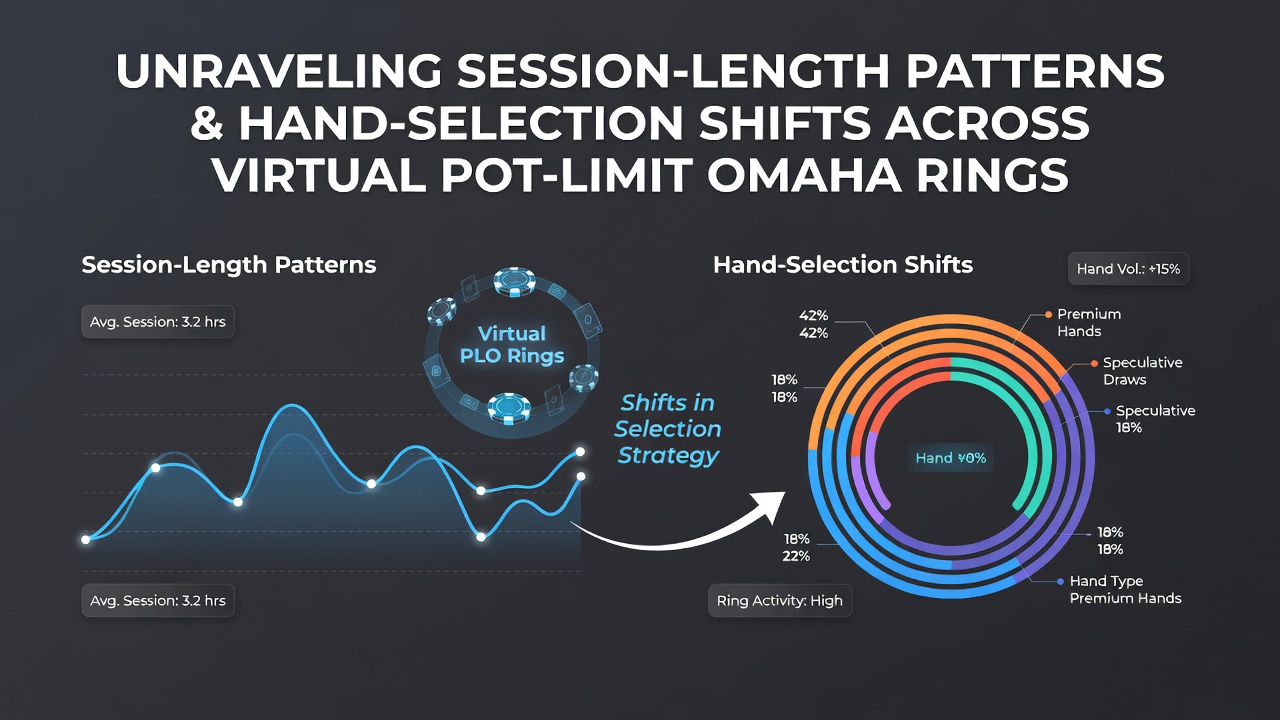
Virtual pot-limit Omaha rings present distinct behavioral patterns that emerge when players extend their time at the tables, and analysts continue to track these trends through aggregated platform data. Session lengths in PLO often cluster around certain thresholds, with many participants logging between 45 and 90 minutes before breaks become common, while longer engagements stretch past two hours during peak evening windows. Researchers examining June 2026 datasets noted that sessions initiated between 8 PM and midnight tended to run 20 percent longer on average than those started in early afternoon slots, reflecting differences in player availability and platform traffic across multiple networks.
Session Duration Trends in Digital PLO Environments
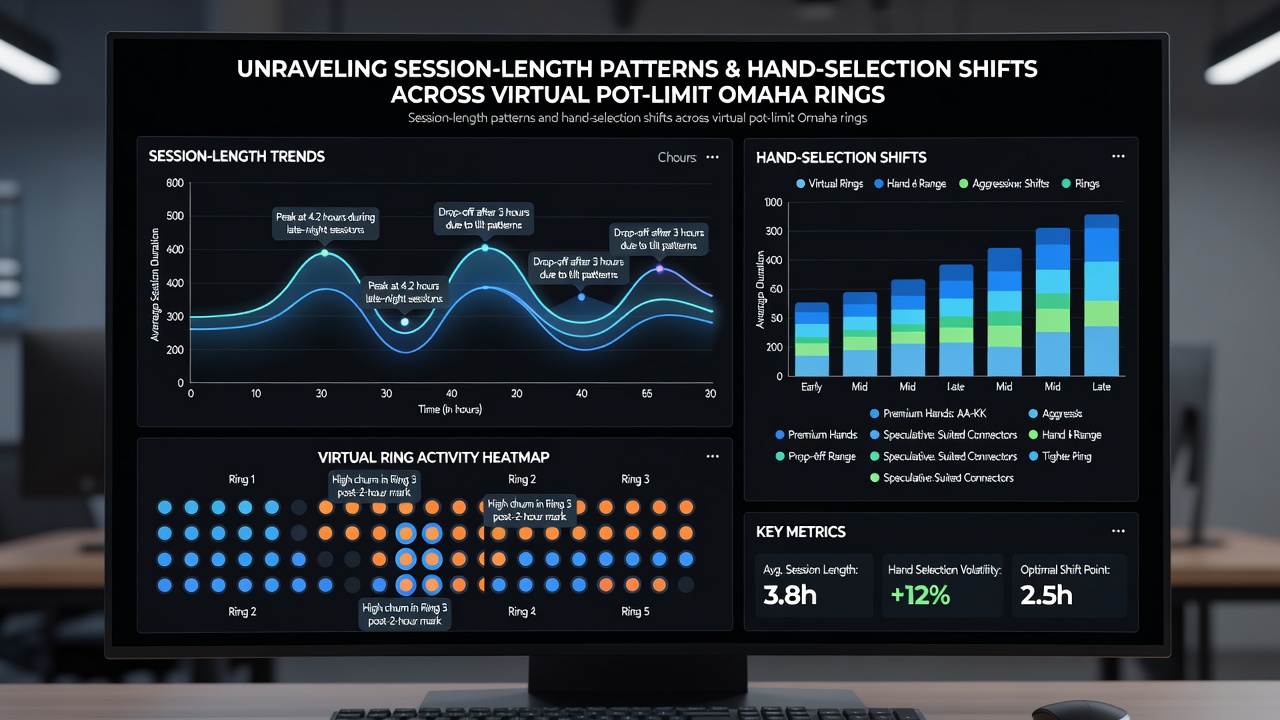
Data compiled from several major online card platforms shows that the median session length for pot-limit Omaha rings has remained stable near 68 minutes over the first half of 2026, yet the distribution reveals clusters at both shorter and extended intervals. Shorter sessions under 30 minutes often occur during quick bankroll checks or between tournament registrations, whereas extended runs beyond 120 minutes appear more frequently on weekends. Observers note that these extended sessions correlate with higher table counts per player, as many switch between multiple windows without leaving the software entirely. According to figures released by the New Jersey Division of Gaming Enforcement, online poker traffic in the state reached record levels during May and June 2026, with PLO variants accounting for roughly 18 percent of total ring game volume.
Platform algorithms that record time-stamped actions provide granular insight into when participants decide to exit or continue. Those who studied these logs found that the probability of session continuation drops sharply after the 75-minute mark unless a player has accumulated a significant stack increase. Conversely, sessions that begin with modest early results show higher continuation rates past the two-hour threshold, suggesting that momentum influences persistence more than absolute profit figures.
Hand Selection Adjustments Over Time
Hand selection patterns shift noticeably as session duration increases. Early in a session, participants tend to enter pots with a broader range of starting combinations, including speculative holdings that require multiple cards to connect. As time at the table lengthens, the frequency of premium starting hands such as double-suited aces or connected high cards rises relative to marginal holdings. This adjustment occurs across stake levels, though the magnitude varies, with micro-stakes tables displaying more pronounced tightening than higher-limit rings.
Studies tracking voluntary put-in-pot percentages demonstrate that the average VPIP declines by approximately 4 to 7 percentage points between the first 30 minutes and the period after 90 minutes. Those reviewing hand histories from June 2026 observed that this tightening coincides with reduced bluff frequencies on later streets, as players appear to favor value-oriented lines once fatigue indicators accumulate. The shift does not eliminate aggression entirely; instead, aggression concentrates around stronger holdings while speculative three-betting diminishes.
Influencing Factors Across Networks
Multiple variables interact to shape these patterns. Time-of-day effects appear consistent across regions, with European and North American traffic peaks producing longer average sessions than Asian or Australian time zones during equivalent local hours. Stake level also plays a role, as higher-stakes PLO rings exhibit shorter median durations yet more stable hand-selection ranges throughout each session. Researchers attribute part of this stability to the narrower player pools at elevated limits, where participants often maintain consistent strategies regardless of elapsed time.
Software updates and interface changes can further influence behavior. One report from the International Gaming Institute at the University of Nevada, Las Vegas examined how session timers and hand-history export tools affect player awareness of duration, finding that visible timers correlate with earlier exits on average. Yet the same analysis showed that players who disable such features maintain longer sessions without corresponding changes in hand-selection tightness, indicating that self-monitoring interacts differently with individual habits.
Comparative Observations Across Regions
Regional differences emerge when comparing European, North American, and Asia-Pacific markets. European platforms report higher proportions of sessions exceeding 120 minutes during weekday evenings, while North American data shows more fragmentation into multiple shorter blocks separated by brief absences. Asia-Pacific rings display intermediate patterns, with weekend sessions clustering around 80 to 100 minutes. These geographic variations align with broader differences in regulatory frameworks and peak activity windows rather than fundamental differences in game dynamics.
Conclusion
Session-length patterns and hand-selection shifts in virtual pot-limit Omaha rings continue to evolve alongside platform features and player demographics. Aggregated records from 2026 illustrate measurable tightening in starting ranges as time progresses, alongside stable overall session medians punctuated by longer outliers during high-traffic periods. Continued monitoring of these metrics offers insight into how digital environments shape decision-making processes across varied stake levels and time zones.