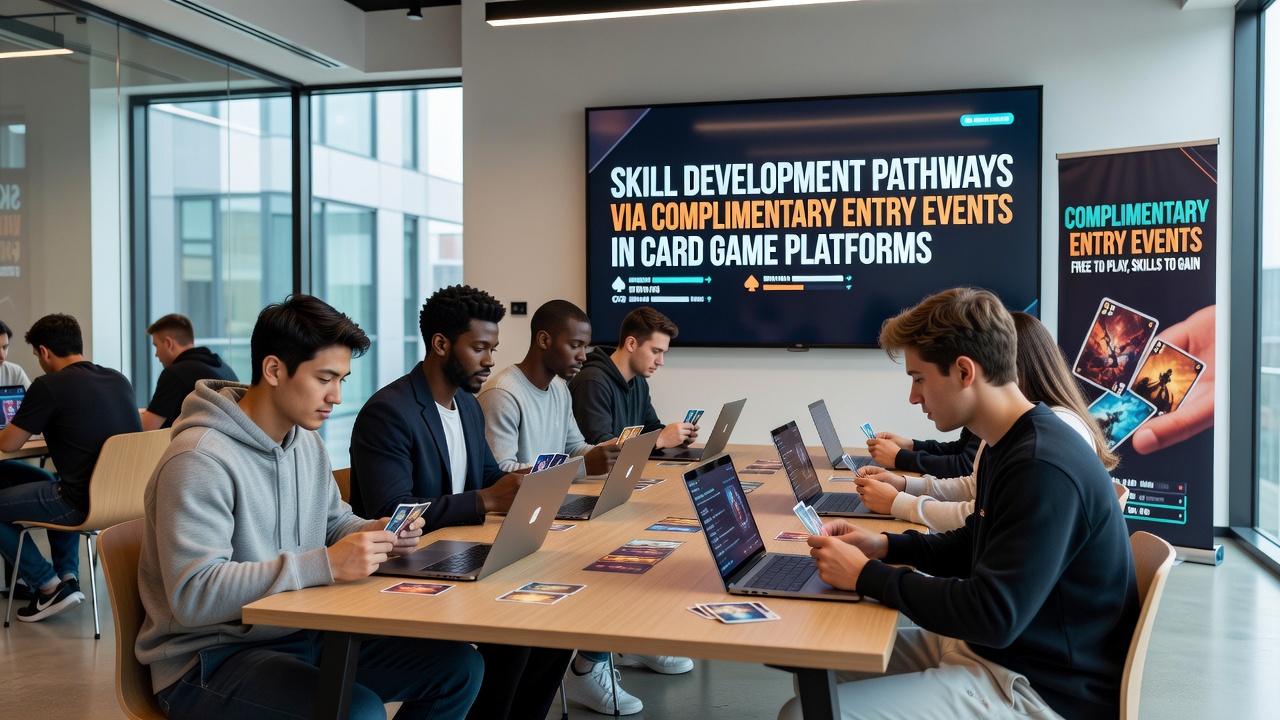
Skill Development Pathways via Complimentary Entry Events in Card Game Platforms
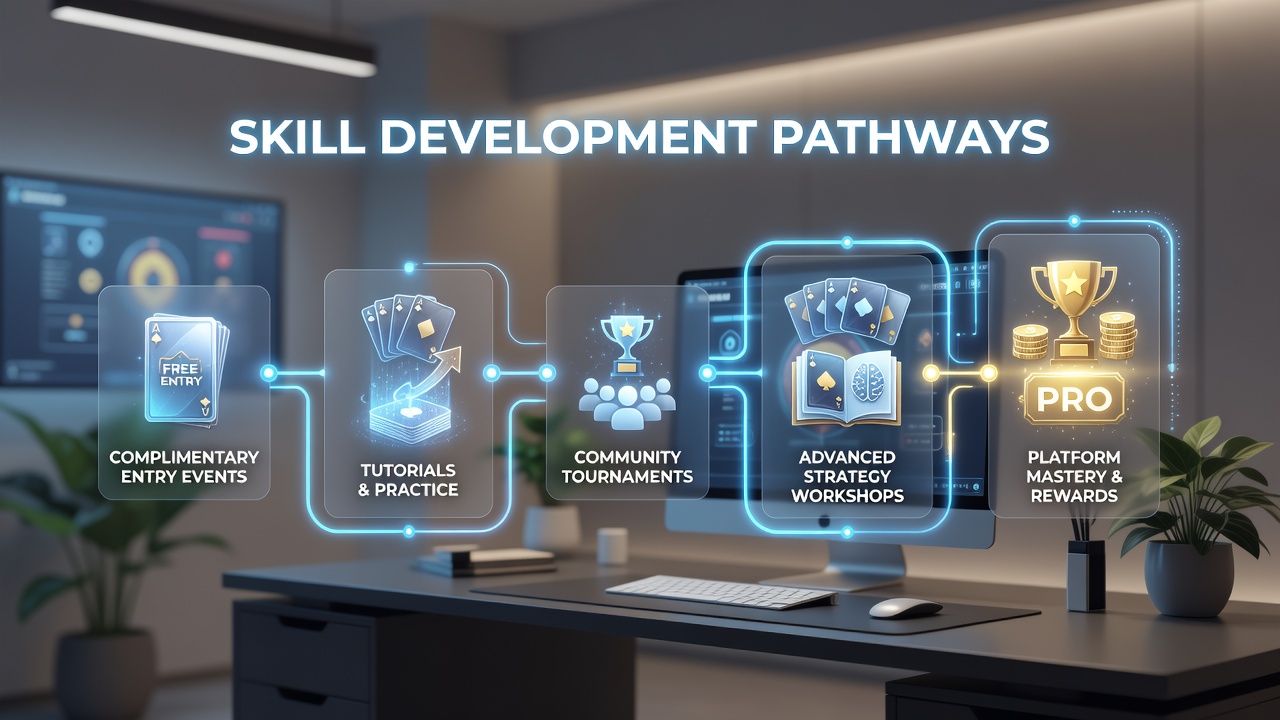
Complimentary entry events on card game platforms function as structured entry points where participants access competitive formats without initial financial outlay, and these formats emphasize repeated practice across rule sets, deck construction, and decision trees that transfer directly to paid environments. Platforms hosting games such as collectible card titles and trick-taking variants schedule daily free-roll structures that mirror the pacing and scoring of premium tables, allowing users to accumulate match data that reveals personal patterns in timing, resource management, and opponent reading.
Platform Structures Supporting Skill Progression
Digital card environments integrate progression ladders that begin with zero-cost qualifiers and advance through tiered brackets based on win rates rather than deposits, and this model appears in multiple regions where operators track aggregate performance metrics to unlock higher-stakes lobbies automatically. In June 2026 several platforms introduced seasonal calibration windows that reset leaderboard thresholds while preserving historical match logs, enabling returning users to compare earlier free-event statistics against later results in the same rule variants.
Observers note that these systems frequently incorporate tutorial overlays triggered by specific in-game actions, such as suboptimal mana sequencing or miscalculated trick counts, which surface explanatory modules drawn from aggregated community data sets. The approach reduces the learning curve by delivering context-specific feedback during live sessions instead of separating instruction from play.
Mechanisms of Skill Transfer
Free entry formats expose participants to randomized card distributions at volumes that paid sessions alone rarely achieve, and repeated exposure builds pattern recognition for common combinations across hundreds of hands per week. Researchers at the University of Toronto have documented measurable gains in decision latency and accuracy among users who maintained consistent free-event schedules before entering fee-based tournaments, with performance differentials narrowing as cumulative free matches increased.
Platforms also embed comparative analytics that benchmark individual choices against top-percentile outcomes from the same bracket, highlighting divergences in mulligan strategy or response timing without requiring external coaching. This feedback loop operates continuously across both free and paid tables, creating a unified data environment where every match contributes to longitudinal skill profiles.
Regional Variations in Event Design
Operators in North America and Asia-Pacific markets adjust complimentary structures according to local connectivity patterns and device preferences, with some regions prioritizing asynchronous formats that permit asynchronous deck testing while others maintain synchronized daily tournaments. A report issued by the Digital Games Research Association outlines how these regional adaptations correlate with higher retention when free events align with peak usage hours derived from platform telemetry.
European platforms, meanwhile, incorporate cross-game qualifiers that allow skill points earned in one title to influence seeding in another, expanding the range of strategic concepts users encounter before committing funds. Such linkages encourage broader familiarity with rule interactions that might otherwise remain siloed within single-game ecosystems.
Measurement of Progression Outcomes
Longitudinal tracking within these platforms records metrics such as average turns per decision, frequency of successful counter-strategies, and adaptation rates following rule patches. Data aggregated across multiple operators shows that users logging at least fifteen free matches weekly demonstrate faster stabilization of win percentages when they transition into paid brackets compared with those entering paid events directly.
Industry organizations including the Canadian Gaming Association have published summaries indicating that structured free-to-paid pathways correlate with extended session lengths and lower early-stage attrition across card game categories. These patterns hold when controlling for variables such as initial skill self-assessment and device type, suggesting the events themselves contribute measurably to sustained engagement.
Integration With Platform Economies
Complimentary events frequently distribute virtual resources that carry over into paid formats, creating tangible links between zero-cost practice and competitive inventory building. Participants accumulate card packs, cosmetic upgrades, or entry tokens redeemable in higher-stakes lobbies, and these rewards scale according to placement rather than participation alone, reinforcing outcome-focused learning.
Platforms update reward tables periodically to reflect meta shifts after major expansions, ensuring free-event participants encounter current archetypes at volumes sufficient to prepare for paid competition. This synchronization keeps skill development aligned with evolving card pools rather than allowing practice environments to drift from live conditions.
Conclusion
Complimentary entry events therefore serve as scalable training environments that deliver high-volume repetition, immediate performance analytics, and graduated access to paid competition across diverse card game platforms. Regional design choices and cross-title linkages further expand the strategic breadth available to users who follow these pathways systematically, while platform telemetry continues to refine bracket structures and feedback mechanisms based on observed performance trends through 2026 and beyond.