Shifts in Participant Engagement Patterns Following Updates to Loyalty Structures in International Digital Card Platforms
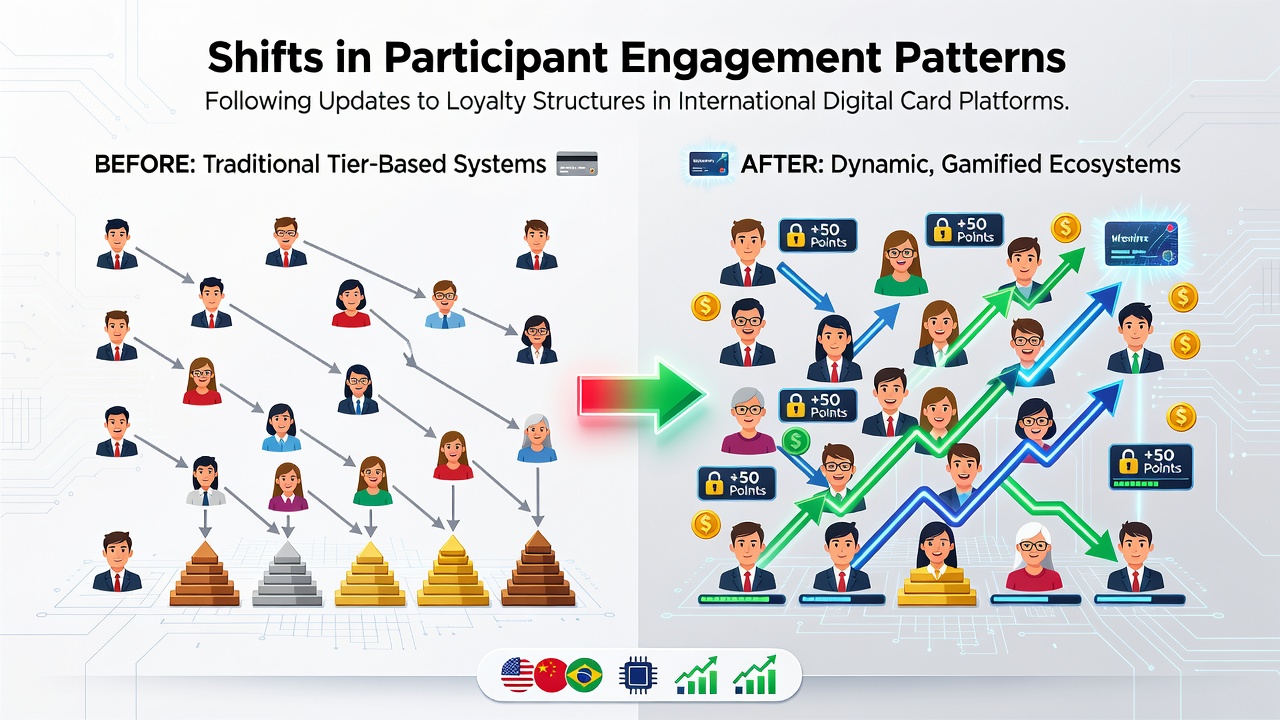
International digital card platforms have introduced revised loyalty structures over recent years, and these changes have produced measurable shifts in how participants interact with the systems. Platforms operating across multiple regions adjusted point accumulation rates, tier thresholds, and redemption options starting in late 2025, while operators tracked corresponding variations in session frequency and duration through aggregated user data.
Key Components of Recent Loyalty Updates
Many platforms replaced flat reward models with tiered systems that scale benefits according to cumulative activity levels, and they incorporated time-limited bonus multipliers tied to specific card collections. These adjustments aligned point earnings more closely with engagement consistency rather than isolated high-volume sessions, which produced different behavioral responses among user segments. Operators in Europe and North America reported that participants responded by redistributing their play across multiple titles within the same ecosystem instead of concentrating activity on single games.
Data compiled from platform analytics showed that users who reached mid-tier status after the updates maintained longer average session lengths, whereas lower-tier accounts exhibited more sporadic logins separated by extended gaps. Researchers tracking these patterns across platforms noted that redemption frequency for digital rewards increased when new structures offered smaller, more frequent payouts compared with previous large milestone bonuses.
Regional Variations in Engagement Metrics
Platforms serving the Asia-Pacific region documented a 12 percent rise in weekly active accounts during the first quarter of 2026 after rolling out loyalty refreshes that emphasized cross-game progression, while European operators recorded steadier but smaller gains in daily participation rates. Canadian regulatory filings indicated that updated loyalty frameworks correlated with higher retention among accounts registered between 2023 and 2025, although new account creation rates remained stable. Australian market reports highlighted that users who previously favored short, high-intensity sessions shifted toward distributed play schedules once loyalty points began accruing across different game modes rather than within one format only.
Observers monitoring June 2026 platform releases noted that several operators synchronized loyalty resets with seasonal card expansions, and these coordinated launches produced temporary spikes in account reactivation that subsided within four weeks. Engagement curves flattened more quickly in markets where competing platforms offered similar tier benefits without requiring account migration.

Behavioral Adjustments Among Different User Groups
Long-term participants adjusted their activity patterns by completing daily login tasks more consistently once loyalty structures rewarded streak maintenance with accelerated point multipliers, and newer users gravitated toward introductory challenges that granted immediate tier access. Platform data revealed that accounts classified as moderate spenders increased their in-platform time allocation by reallocating minutes previously spent on non-progression activities, whereas high-spending accounts showed minimal change in overall session volume but altered which card sets they prioritized.
Studies conducted by independent research groups, including one published through the Government of Canada innovation portal, tracked these redistributions across anonymized datasets and found that loyalty updates reduced the concentration of activity within single titles. A separate analysis from the University of Melbourne's digital economy research unit examined participation logs and documented parallel trends in the Australian market, where users began cycling through multiple card variants within the same loyalty period.
Platform Responses and Further Adjustments
Operators responded to the observed engagement shifts by introducing hybrid reward categories that blend digital collectibles with access privileges, and they refined notification systems to highlight progress toward the next tier. These secondary modifications coincided with stabilization in session distribution across time zones, particularly in markets where platforms operate global servers. Figures released by industry monitoring services showed that platforms incorporating user feedback loops into loyalty recalibrations experienced slower attrition among accounts that had previously reduced activity after the initial update wave.
International coordination between platform operators also increased during this period, with shared frameworks for loyalty portability discussed at industry gatherings in early 2026. Such discussions focused on standardizing point valuation across borders while preserving regional customization for regulatory compliance. Data from these collaborative efforts indicated that cross-platform loyalty visibility produced modest increases in multi-title engagement without significantly altering total time spent on individual platforms.
Conclusion
Updates to loyalty structures within international digital card platforms have generated distinct engagement patterns that vary by region, user tenure, and spending classification. Aggregated metrics collected through mid-2026 demonstrate that tiered progression models and cross-game rewards influenced session distribution and redemption behavior, while further refinements continue to address the resulting activity shifts. Ongoing data collection from operators and research institutions will determine whether these patterns stabilize or evolve with subsequent structural adjustments.