Riverboat Lexicon Legacies: How Frontier-Era Poker Slang Migrated into Global Tournament Communications
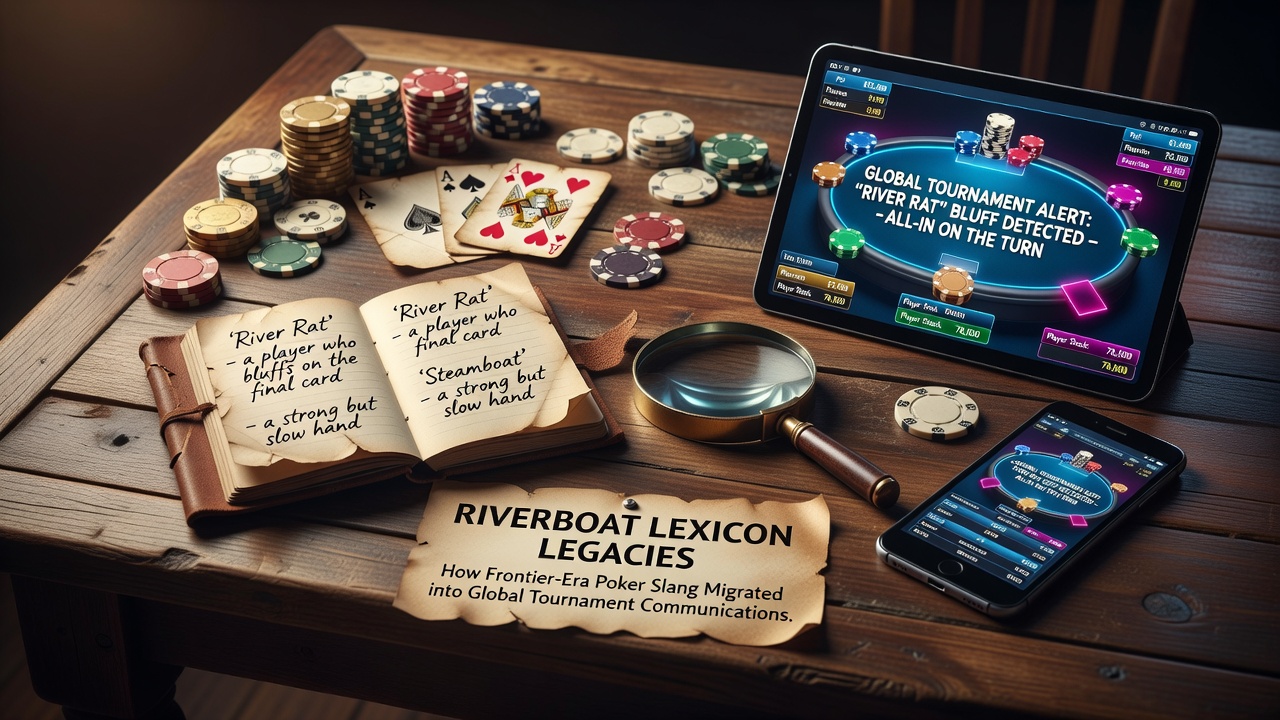
Origins Along the Mississippi
Frontier-era poker developed on 19th-century riverboats where crews and passengers combined French, English, and Spanish card terms into a shared vocabulary that suited fast-paced games played during long voyages and these expressions traveled with migrating populations toward urban centers and established gambling houses. Historians trace phrases such as "ante" and "bluff" to steamboat tables where players needed quick verbal cues amid noise and movement while records from that period show dealers announcing actions in shorthand that reduced misunderstandings during high-stakes hands.
Researchers at institutions focused on American regional history document how riverboat crews adopted words like "call" and "raise" from earlier European gaming practices yet adapted pronunciation and usage to fit the American context and these adjustments created a distinct lexicon that distinguished river play from land-based saloons. Data compiled by the UNLV Center for Gaming Research indicates that many surviving terms originated in the 1830s through 1860s when steamboat traffic peaked along the Mississippi and Ohio rivers.
Key Terms and Their Riverboat Roots
Terms including "poker face," "dead man's hand," and "river card" emerged from specific incidents and environments aboard vessels where limited space forced concise communication and observers note that "river" itself referred to the final community card because games often concluded near the end of a river leg. "Boat" slang sometimes described an exceptionally strong hand that carried players through multiple rounds and these expressions persisted because participants repeated them across journeys and ports.
Evidence from period newspapers and passenger diaries reveals that "all-in" gestures accompanied verbal declarations when stacks grew too large for verbal counting alone and such practices standardized hand signals that later tournament officials retained for clarity across language barriers. Studies of frontier gambling show that riverboat dealers favored short, rhythmic phrases that carried over engine noise and these habits influenced how modern floor staff manage large fields.
Migration Through Player Networks
Professional gamblers who worked river routes carried the lexicon westward to California gold fields and northward to emerging cities and their travels created pathways that later connected with transatlantic steamship routes bringing the same terminology to European ports. By the early 20th century, traveling players introduced river-derived expressions into private clubs and hotel games where new audiences adopted them without direct exposure to steamboats.
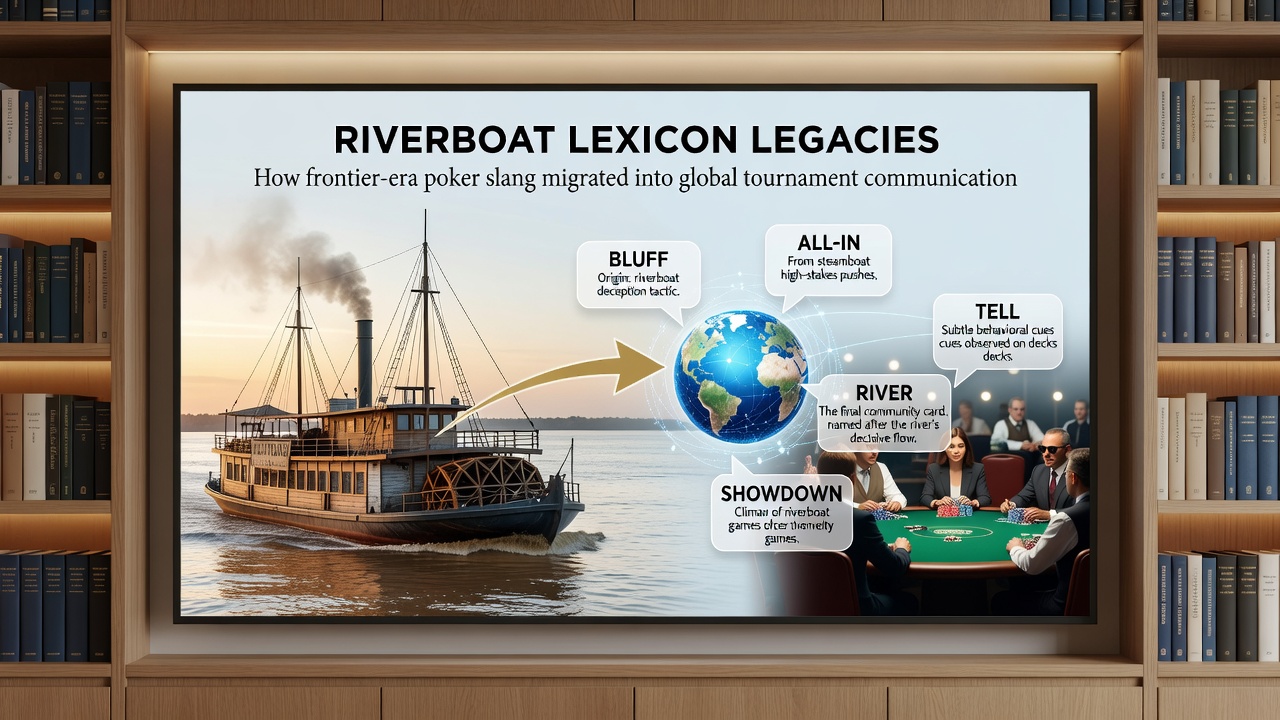
Archival footage and tournament transcripts from the mid-20th century demonstrate that Las Vegas casinos preserved many riverboat phrases when they formalized poker rooms and these venues served as hubs that exported terminology to international circuits. Figures from the American Gaming Association reveal steady growth in cross-border player movement after 1970 which accelerated the spread of specific calls and warnings that originated on river vessels.
Integration Into Contemporary Tournament Protocols
Global events such as the World Series of Poker and European Poker Tour adopted standardized dealer scripts that incorporate legacy slang because consistent language reduces disputes among participants from dozens of countries and training materials distributed by major circuits include glossaries that trace phrases back to frontier sources. In June 2026 several international series continued this practice by requiring dealers to use English terms for all betting actions regardless of player nationality.
Industry reports from regulatory bodies in Nevada and New Jersey document how tournament officials audit table talk to maintain clarity while allowing traditional expressions that carry precise meanings across variants. Academic papers on gambling communication highlight that these terms function as a neutral code that bypasses translation delays during fast-paced rounds and video analysis of recent final tables shows repeated use of "check," "fold," and "raise" in patterns unchanged since riverboat days.
Conclusion
Riverboat poker slang reached global tournament communications through documented patterns of player migration, media coverage, and institutional standardization that preserved functional phrases across centuries. Historical records combined with contemporary usage data confirm that expressions developed on Mississippi vessels continue to structure announcements and strategy discussions at events held on multiple continents. Organizations tracking gaming history note that this linguistic continuity supports efficient play among diverse participants and ensures that core actions remain universally understood without requiring new terminology for each generation of events.