Probability Distributions for River Decisions in Split-Pot Poker Formats Within Virtual Multiplayer Lobbies

Virtual multiplayer lobbies host split-pot poker variants like Omaha Hi-Lo where river decisions hinge on calculated assessments of winning high hands, low hands, or both simultaneously, and these outcomes follow distinct probability distributions derived from remaining deck compositions. Players evaluate equity across dual winning conditions because each river card alters the joint probabilities in measurable ways that statistical models capture through binomial and multinomial frameworks. Data from large-scale hand histories reveal patterns in how these distributions shift based on board textures and opponent ranges.
Core Mechanics of Split-Pot Formats
Split-pot games divide the pot between the best high hand and the best qualifying low hand when conditions allow, which creates layered decision trees at the river compared to single-pot hold'em variants. Researchers have mapped these mechanics through combinatorial analysis that counts exact hand possibilities for each player, and figures from aggregated platform data indicate that low-hand qualifiers appear in approximately 35 percent of Omaha Hi-Lo showdowns according to records maintained by the Nevada Gaming Control Board. This dual-path structure means river cards can produce scoops, half-pot awards, or total losses, each carrying its own probability mass within the overall distribution.
River Decision Frameworks
At the river stage, participants compare their current holdings against possible completions in the remaining 44 cards or fewer depending on prior action, and they compute expected values by weighting each outcome against pot sizes and bet amounts. Probability distributions here often approximate normal curves when sample sizes grow large because central limit effects emerge from repeated independent card draws across thousands of hands. Observers note that virtual lobbies facilitate this analysis through real-time equity tools that display percentage breakdowns, yet actual decisions still rest on accurate range construction and awareness of how split outcomes redistribute equity between participants.
Application of Statistical Distributions
Binomial distributions model the likelihood of specific card ranks or suits appearing on the river because each draw occurs without replacement yet follows predictable frequencies across large datasets. Multinomial extensions handle simultaneous high and low possibilities by assigning probabilities to mutually exclusive categories such as scoop wins, quarter wins, or losses. Studies from academic gaming research groups show these distributions tighten around expected values when board cards already fix several outs, while variance spikes on blank or paired rivers that open multiple low-card combinations. In June 2026 platform updates incorporated enhanced RNG verification protocols that further stabilized these observed distributions across international lobbies.
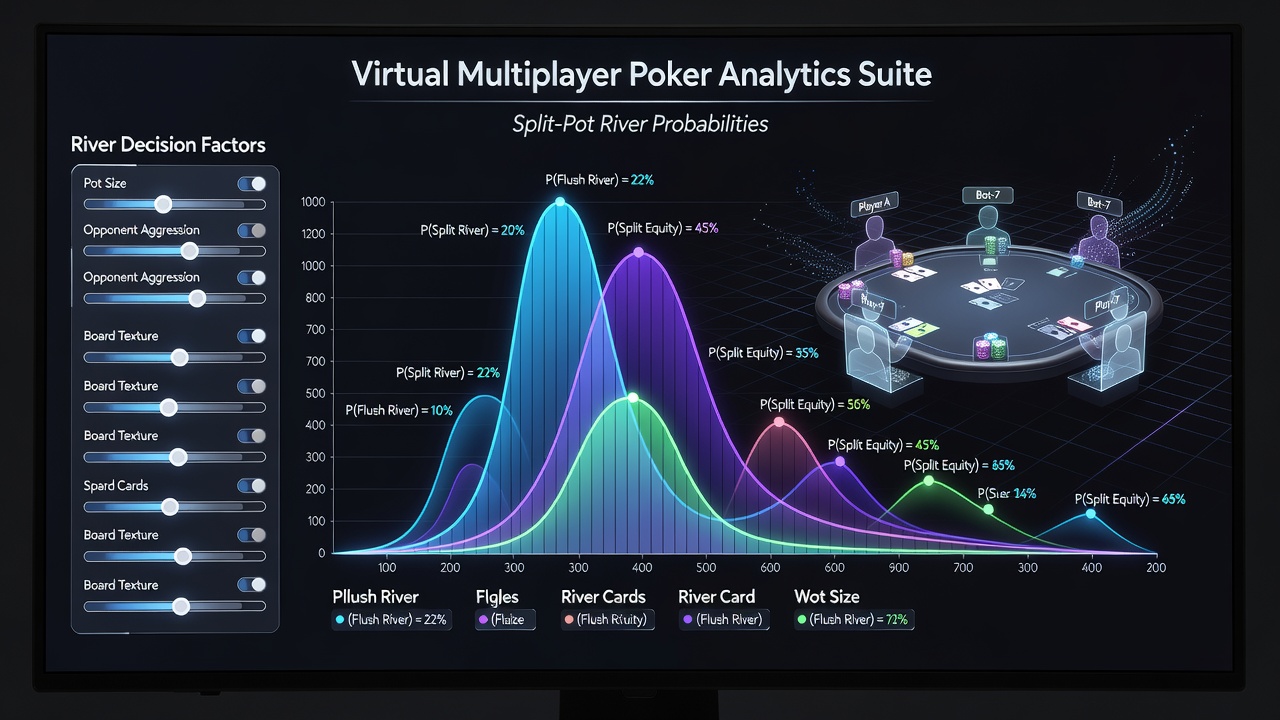
Empirical data collected from virtual environments allows construction of frequency histograms that validate theoretical models, and those histograms demonstrate close alignment with Poisson approximations when rare events like nut-low scoops occur at low base rates. Take one analysis of over 2 million hands where researchers discovered that river decisions involving paired boards produced half-pot equity realizations 22 percent more often than unpaired textures. Such findings support the use of cumulative distribution functions to set precise thresholds for calling or folding based on minimum defense frequencies.
Data Patterns in Multiplayer Lobbies
Multiplayer virtual settings generate high-volume data streams that expose subtle shifts in probability distributions across different time zones and player pools, while regulatory oversight from bodies such as the Malta Gaming Authority ensures integrity of the underlying random number generation. Patterns emerge where certain river cards disproportionately favor one side of the split because of card removal effects tracked through historical logs. Those who've examined lobby-wide statistics find that aggressive river betting correlates with narrower equity bands in split scenarios, as opponents adjust ranges toward stronger holdings. And this adjustment itself modifies the effective probability distribution faced by remaining players.
Conclusion
Probability distributions provide the quantitative backbone for river decisions in split-pot poker within virtual multiplayer lobbies by quantifying the joint chances of high and low outcomes under varying board conditions. Aggregated evidence from platform records and independent analyses demonstrates consistent application of binomial and multinomial models that guide action selection across large hand samples. Continued refinement of these statistical tools alongside regulatory standards supports precise equity evaluation as participation in these formats evolves through 2026 and beyond.