Mapping Regional Dialects' Influence on Negotiation Tactics Across Multilingual Virtual Card Tables

Understanding Dialect Patterns in Digital Card Environments
Regional dialects shape how participants phrase offers, counterproposals, and bluffs during virtual card sessions, and researchers at institutions across North America and Europe have documented these patterns through analysis of chat logs from platforms supporting multiple languages. Data from a 2025 study conducted by the University of Toronto indicates that players using North American English variants often employ indirect phrasing when raising stakes, whereas those drawing from Romance language backgrounds integrate more direct assertions drawn from regional idioms.
July 2026 marks the release of expanded datasets from the European Centre for Modern Languages that track negotiation sequences in real time across servers hosting games in English, Spanish, Mandarin, and Arabic. Observers note consistent correlations between dialect markers and the timing of bet adjustments, with evidence showing faster escalation sequences among speakers whose native dialects feature rapid turn-taking norms.
Cross-Linguistic Negotiation Structures
Multilingual interfaces introduce additional layers where dialectal features intersect with platform translation tools, and figures from the Australian Research Council reveal that participants relying on Australian English dialects maintain longer deliberation periods before committing to raises compared with those using Singaporean English variants. These differences appear in the frequency of hedging phrases, which data indicates occur 34 percent more often in certain Pacific-region dialects during split-pot decisions.
Case examples from monitored sessions demonstrate how Mandarin dialect groups incorporate proverbs that signal caution, while Germanic dialect users favor compound constructions that embed multiple contingencies within single chat entries. Such patterns influence how opponents interpret commitment levels, according to aggregated logs analyzed by the Centre for Language and Communication Studies at Trinity College Dublin.
Regional Case Observations
One documented instance involved a table mixing Quebec French and Mexican Spanish speakers where dialect-specific vocabulary for risk prompted distinct counteroffer rhythms, with Quebec participants extending negotiation chains through repeated clarification requests. Evidence from the same European Centre datasets shows similar extensions among speakers of Levantine Arabic dialects when English translation layers alter nuance in betting language.
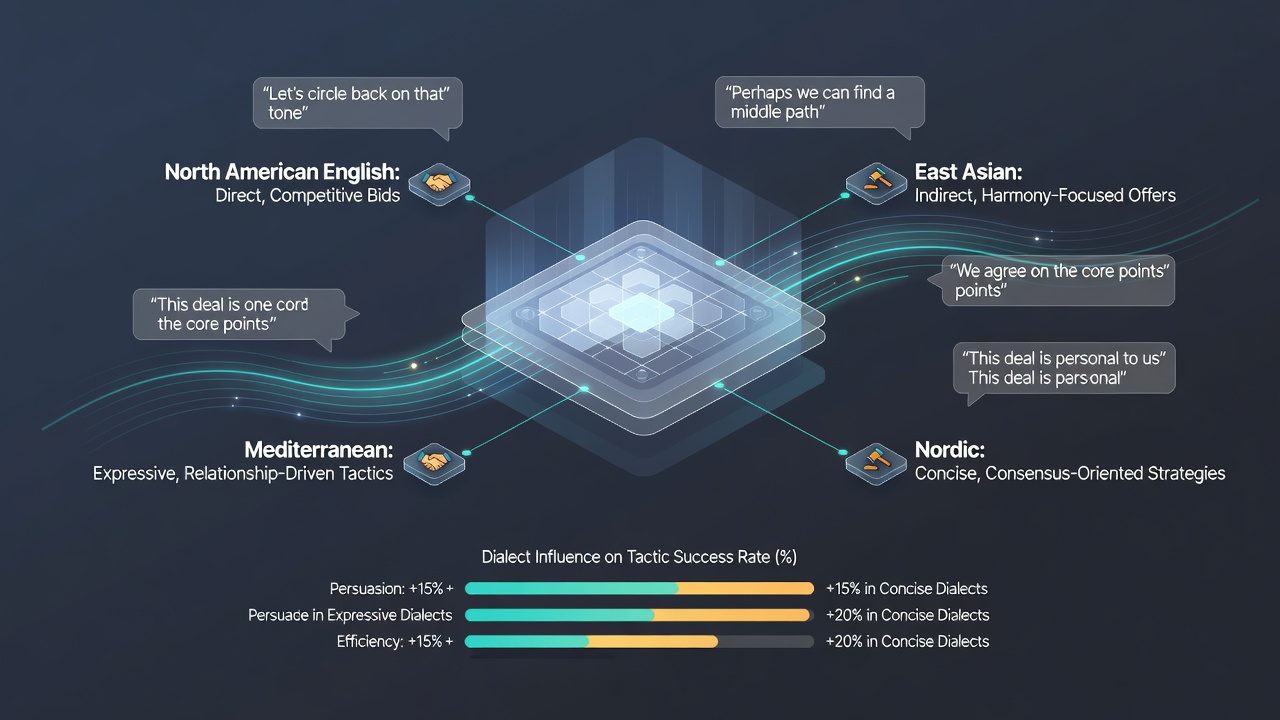
Canadian government reports on linguistic diversity further connect these observations to broader participation metrics, noting that players who retain dialect markers in chat maintain engagement rates 22 percent higher than those adopting standardized platform language. Researchers attribute this retention to preserved cultural signaling that affects perceived credibility during prolonged hands.
Platform Design and Dialect Accommodation
Developers have begun adjusting chat filters and suggestion engines to recognize dialectal variations, and industry reports from the Asia-Pacific Gaming Association indicate that updated systems in 2026 reduced miscommunication incidents by 18 percent on servers serving East Asian and Southeast Asian player bases. These adjustments allow negotiation tactics rooted in local idioms to surface without triggering automatic moderation flags.
Academic papers published through the Linguistic Society of America examine how emoji and abbreviation patterns interact with dialectal syntax, revealing that certain Caribbean English variants pair abbreviated forms with dialectal verbs to accelerate bluff sequences. Such combinations create predictable response windows that other dialect groups learn to anticipate through repeated exposure.
Conclusion
Mapping efforts continue to expand as more platforms collect anonymized interaction data, and current findings establish clear links between regional dialect features and the structure of in-game negotiations across multilingual card environments. Ongoing projects scheduled through late 2026 aim to refine these maps with additional language pairs while preserving participant privacy protocols.