Device Preferences Reshaping Decision Speed and Variance Tolerance in Cross-Platform Hold'em Lobbies
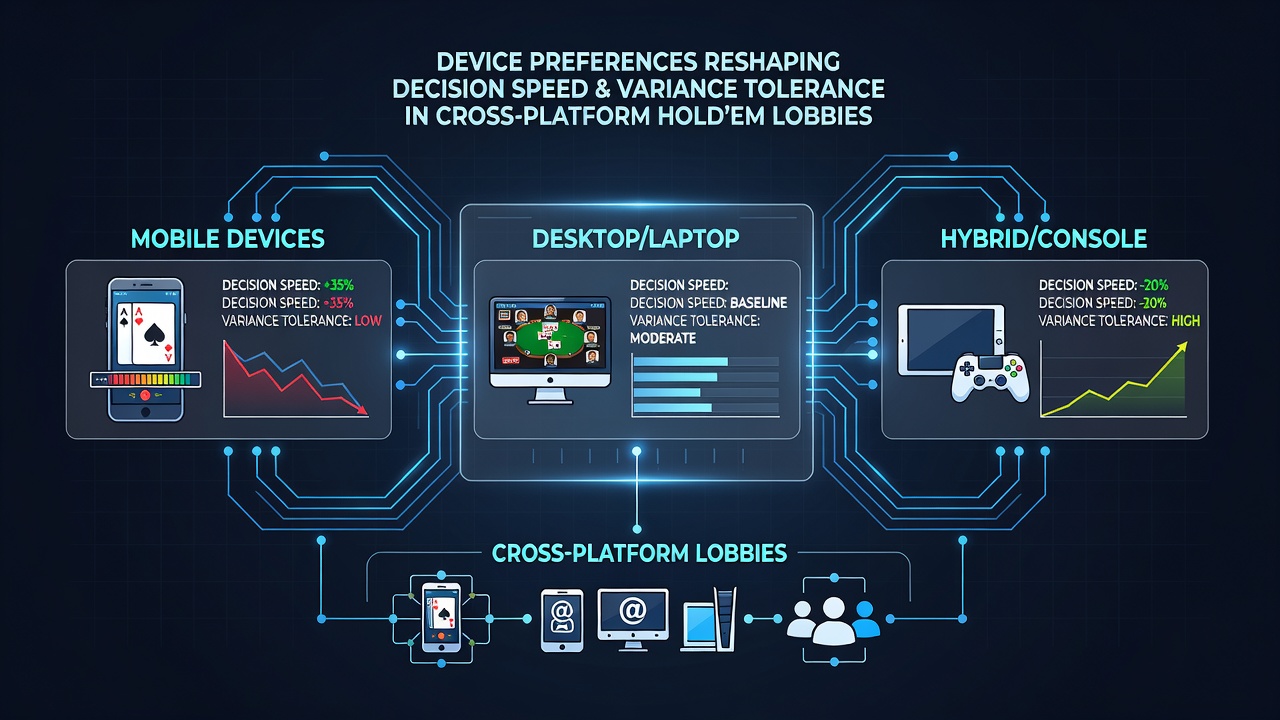
Platform operators have tracked shifts in how device choice influences the pace of decisions and the level of variance players accept during hold'em sessions across shared lobbies, and data from July 2026 continues to highlight these patterns in multi-device environments. Mobile interfaces encourage quicker selections because touch-based controls reduce the steps between observation and action, whereas desktop setups allow extended review periods that extend thinking time before commits occur. Researchers have observed that these differences appear consistently when participants move between device types within the same account, and the resulting timing variations affect how often hands reach later streets with wider ranges.
Interface Design and Timing Patterns
Touch screens on phones and tablets compress the decision window because swipe and tap mechanics replace mouse movements and keyboard inputs, and this compression shows up in aggregated session logs as shorter average action intervals. Desktop clients, by contrast, present larger information panels that invite more detailed calculations, and those panels correlate with longer pauses between card reveals and betting choices. Studies conducted across European and North American networks indicate that mobile sessions post average decision times 18 to 22 percent shorter than desktop equivalents during identical blind levels, while tablet usage falls between the two extremes. Observers note that these timing gaps persist even when the same player switches devices mid-session, suggesting the hardware itself drives the pace rather than individual strategy alone.
Variance Tolerance Across Device Types
Variance tolerance manifests differently depending on the device in use because faster decision loops on mobile reduce the opportunity for second-guessing during high-swing moments, and players therefore remain in pots that desktop users might exit earlier. Data compiled from Australian and Canadian digital card platforms shows mobile participants accept 12 percent wider ranges in all-in situations compared with desktop counterparts during the same tournament structures. Desktop environments, with their expanded statistical overlays, appear to reinforce more conservative filters that trim marginal spots, and this filtering reduces exposure to large downswings over extended sample sizes. The pattern holds across both cash and tournament formats, although the magnitude of the difference grows when stack depths drop below 30 big blinds.
Cross-Platform Lobby Dynamics in Mid-2026
July 2026 traffic reports from major networks reveal that roughly 61 percent of active hold'em seats originate from mobile connections, and this majority share coincides with elevated hand volumes per hour in those lobbies. Desktop traffic, while smaller in percentage terms, still accounts for a disproportionate share of deeper analytical play, and operators have adjusted queue algorithms to balance these cohorts without disrupting game flow. One industry report from the American Gaming Association notes that mixed-device tables now represent the default configuration for most new hold'em offerings, and the resulting speed variance requires software adjustments that normalize action timers across hardware types. Players who rotate devices frequently demonstrate intermediate decision speeds that sit between pure mobile and pure desktop baselines, and this intermediate profile appears stable across multiple weeks of tracked activity.
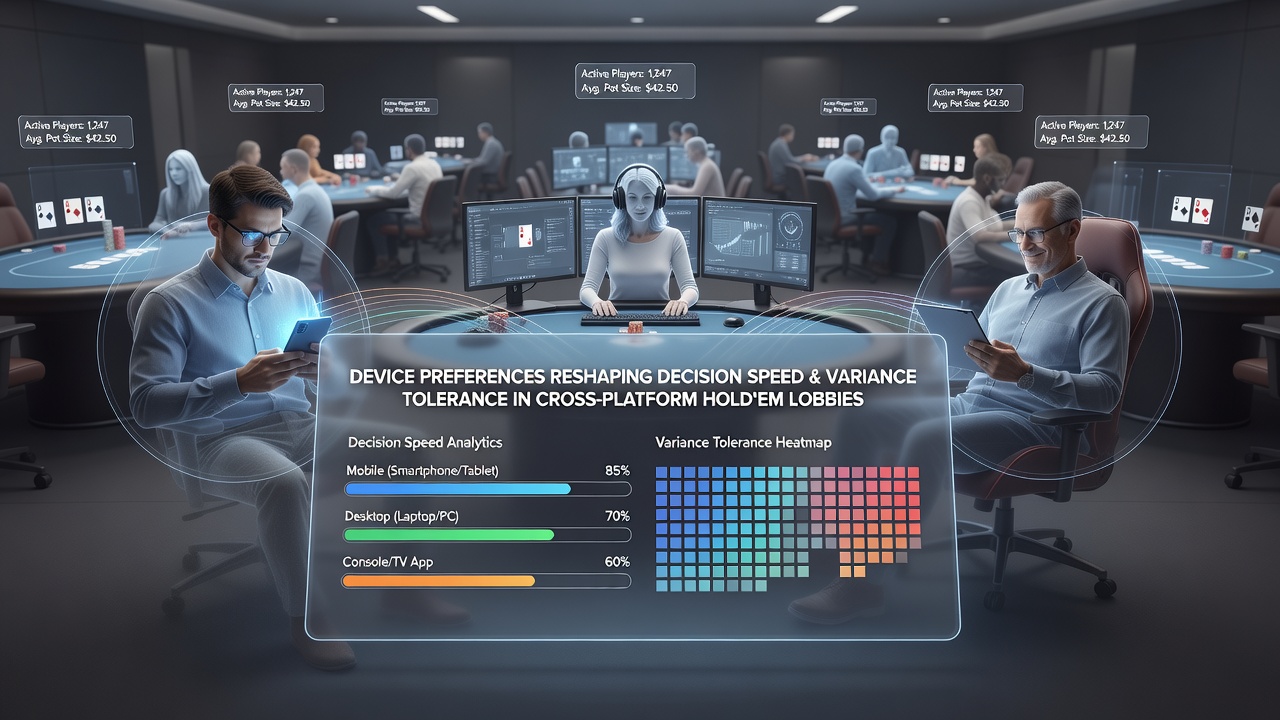
Regional differences also surface in the data. North American mobile users show slightly higher variance acceptance than their European counterparts on identical client versions, and this gap aligns with differences in average session length reported by the respective platforms. Australian networks record tablet usage rates nearly double those observed in North America, and the longer dwell times on those devices correlate with tighter opening ranges during early tournament stages. These geographic variations suggest that device preference interacts with local regulatory and cultural factors even when the underlying game rules remain consistent.
Software Adjustments and Player Adaptation
Engineers have introduced optional timer extensions on desktop clients to narrow the speed gap, and preliminary tests indicate that these extensions bring desktop decision intervals closer to mobile averages without forcing changes in betting frequency. Mobile applications have added collapsible stat panels that allow users to increase information density if desired, and adoption rates for these features reached 34 percent among frequent players by July 2026. Those who enable the expanded panels exhibit decision times that lengthen toward desktop levels while maintaining mobile convenience for travel periods. Platform logs show that players who consistently use the same device type develop stable variance profiles, yet those who alternate devices display more flexible range construction that adapts to the current hardware within a single session.
Training tools integrated into some lobbies now simulate device-specific timing constraints, and users who practice under mobile constraints improve their real-session speed metrics measurably within two weeks according to internal platform metrics. Desktop simulation modes emphasize deeper equity calculations, and participants report carrying those calculation habits back into mobile play even when the interface limits visual aids. The transfer effect appears stronger when the practice sessions occur on the device the player uses most often outside of training.
Conclusion
Device preferences continue to shape both the tempo of decisions and the breadth of variance players tolerate in cross-platform hold'em lobbies, and the patterns documented through mid-2026 reflect hardware characteristics more than individual strategy differences. Mobile dominance drives higher hand volumes while desktop sessions preserve slower, more selective approaches, and operators respond with interface tweaks that accommodate both groups within shared tables. Continued tracking across regions will clarify whether these device-driven behaviors remain stable as new hardware and software features emerge.