Decoding Seasonal Event Structures and Their Effects on Hand Range Adaptations in Browser-Based Omaha Hi-Lo Lobbies
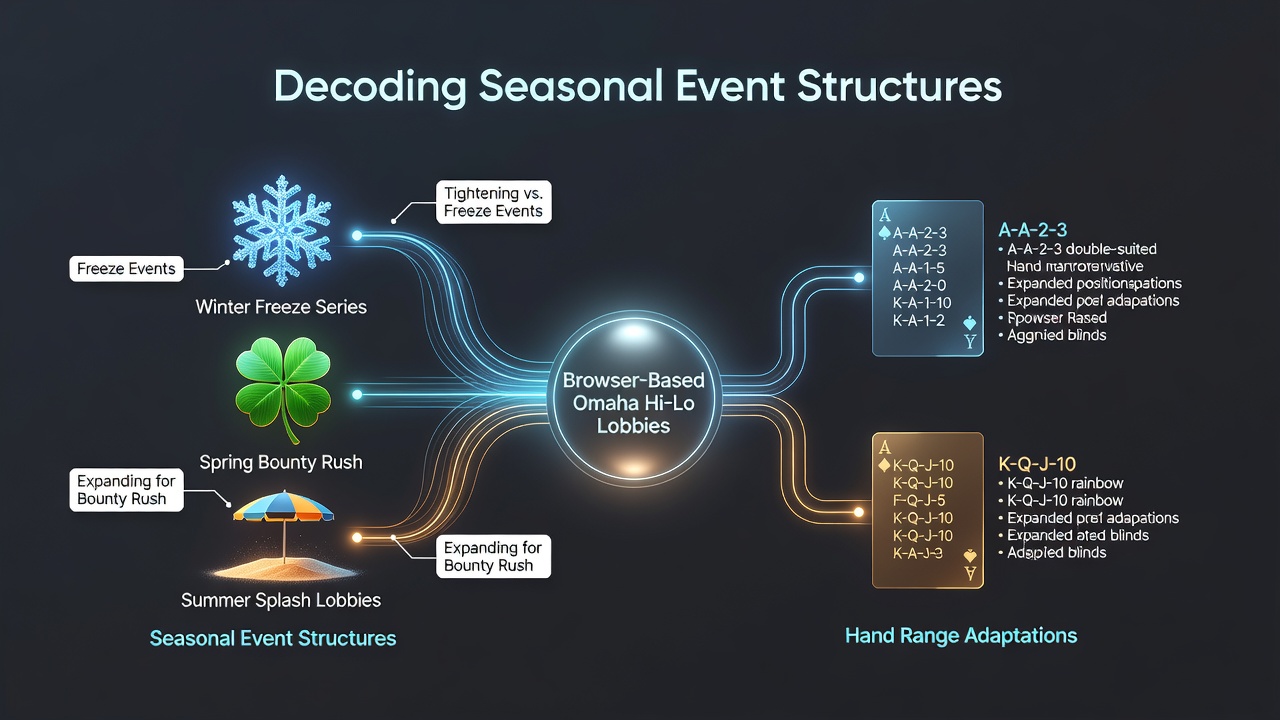
Browser-based Omaha Hi-Lo lobbies organize seasonal events around fixed calendars that include summer series in July 2026, holiday specials, and regional qualifiers, each featuring distinct structures such as guaranteed prize pools, varying blind levels, and split-pot payout percentages. These formats influence player participation patterns, with data from the Nevada Gaming Control Board indicating increased traffic in multi-table formats during peak summer months when entry volumes rise by measurable margins across digital platforms.
Seasonal Event Frameworks in Digital Lobbies
Seasonal structures typically incorporate progressive guarantees that scale with registration numbers, alongside adjustments to starting stacks and ante requirements that shift throughout the calendar year. Observers note how July 2026 events often feature accelerated blind structures in early rounds, which compress decision windows and alter equity calculations in high-low scenarios. Research from the University of Nevada Las Vegas gaming studies program shows correlations between these compressed timelines and measurable changes in average hand volume per hour across browser sessions.
Platforms adjust payout distributions during seasonal peaks, allocating larger percentages to low-hand qualifiers in certain brackets while maintaining standard high-hand rewards in others. This creates layered incentive systems that participants navigate through registration filters and lobby sorting tools. Data indicates higher registration spikes in events labeled as "Omaha Hi-Lo Summer Showdowns" compared to standard ring game traffic, with patterns repeating across multiple annual cycles.
Hand Range Adjustments Driven by Event Parameters
Players adapt starting ranges in response to guaranteed prize pools and field sizes, tightening selections for premium two-way hands like A-2-3-4 suited combinations during larger seasonal fields. Smaller guarantee events see wider inclusions of speculative holdings that perform better in shorter stacks, according to aggregated session data from international platforms. These adaptations emerge through repeated exposure to structure sheets that detail blind intervals and payout thresholds.
Browser interfaces display real-time field size updates that prompt range recalibrations mid-registration periods. Studies conducted by the Australian Gambling Research Centre reveal that participants in seasonal Omaha Hi-Lo events demonstrate statistically significant shifts toward nut-low heavy ranges when payout structures emphasize low-hand bonuses. Such patterns hold across varied time zones and player pools, reflecting consistent responses to posted rules rather than random variance.
Platform Mechanics and Range Visibility Tools
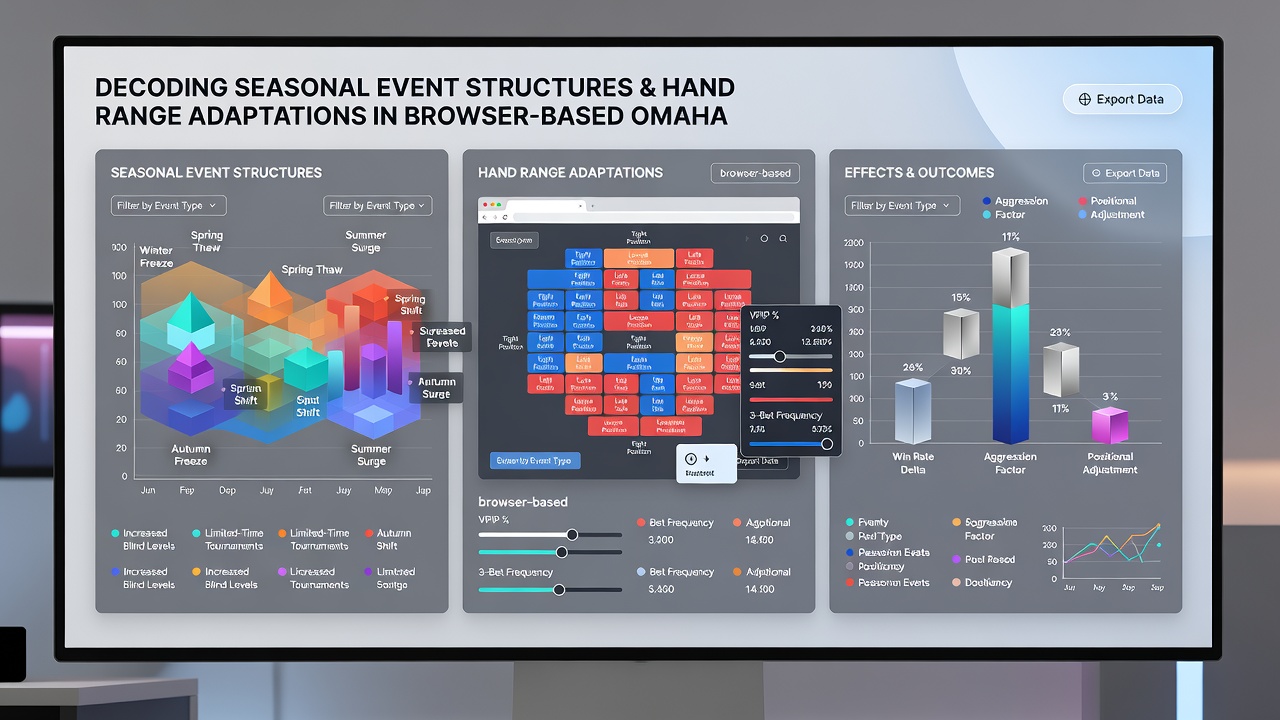
Digital lobbies provide filtering options that highlight events by structure type, allowing participants to sort by average pot size or historical hand frequency metrics derived from prior seasons. These tools facilitate pre-session planning where ranges get pre-loaded into tracking software that flags deviations during play. Evidence from aggregated platform logs points to increased usage of such filters during July 2026 summer events, where structure changes occur more frequently than in off-peak periods.
Equity calculation overlays within browser clients update dynamically based on remaining players and stack depths, guiding adjustments away from marginal holdings in bloated fields. Seasonal events with shorter levels accelerate these updates, prompting earlier folds on marginal low draws. Figures compiled by the Alcohol and Gaming Commission of Ontario track similar behavioral responses in comparable split-pot formats, confirming that range narrowing occurs at predictable stack-to-blind ratios.
Long-Term Patterns Across Multiple Seasons
Recurring seasonal calendars produce cumulative effects on range memory, where experienced participants carry adaptations from one event series into subsequent ones. Browser session histories reveal clustering around specific hand types during holiday structures versus summer guarantees, with measurable differences in showdown frequencies. Regulatory filings from multiple jurisdictions document these trends without attributing causation beyond structural variables.
Qualifiers feeding into main seasonal events add another layer, as satellite structures encourage broader ranges to maximize volume in low-entry brackets. Data from these feeder events shows elevated play of connected low cards compared to direct-entry tournaments, a distinction maintained through lobby categorization systems that separate satellite listings. Such distinctions persist across annual cycles documented in industry reports.
Conclusion
Seasonal event structures in browser-based Omaha Hi-Lo lobbies generate measurable influences on hand range selections through their specific rules on guarantees, blind progression, and payout allocations. Participants respond with documented adjustments that align with posted parameters, as confirmed by regulatory data and academic tracking across regions. These dynamics continue to evolve with each calendar cycle, including the July 2026 series, where structural variations produce consistent patterns in digital play environments.