Betting Pattern Sequences in Digital Razz Sessions Expose Overlooked Timing Dynamics Across Global Networks

Digital Razz sessions operate on structured lowball rules where players build the lowest possible hand from seven cards, and betting pattern sequences in these environments reveal timing dynamics that span global networks. Researchers at institutions tracking online gaming activity note that sequences of bets, checks, and raises align with specific clock intervals measured in milliseconds, which platforms record automatically during each street of action.
Core Mechanics of Digital Razz Play
Razz follows stud-style dealing with three cards exposed after the initial bring-in, and participants must navigate forced bets plus voluntary wagers while avoiding high cards that damage hand potential. Data from platform logs indicate that timing between decisions stretches or compresses depending on whether a player holds a made low or draws to one, creating measurable clusters across thousands of hands played daily.
Global networks connect servers in multiple jurisdictions, so latency differences between regions influence how quickly sequences unfold. Studies conducted through academic partnerships show that players in high-bandwidth areas complete actions 120 to 180 milliseconds faster on average than those routing through distant nodes, yet the underlying pattern structures remain consistent when normalized for connection speed.
Sequence Identification and Timing Metrics
Betting pattern sequences appear when consecutive actions repeat within narrow time windows, such as a check-raise executed between 850 and 920 milliseconds after card receipt. Analysts examining aggregated session data find these clusters occur more frequently during later streets when pot sizes grow and remaining cards dwindle. Platforms log every timestamp, allowing pattern detection algorithms to flag recurring intervals that correlate wth hand strength distributions reported in industry reports.
Regional Variations in Timing Dynamics
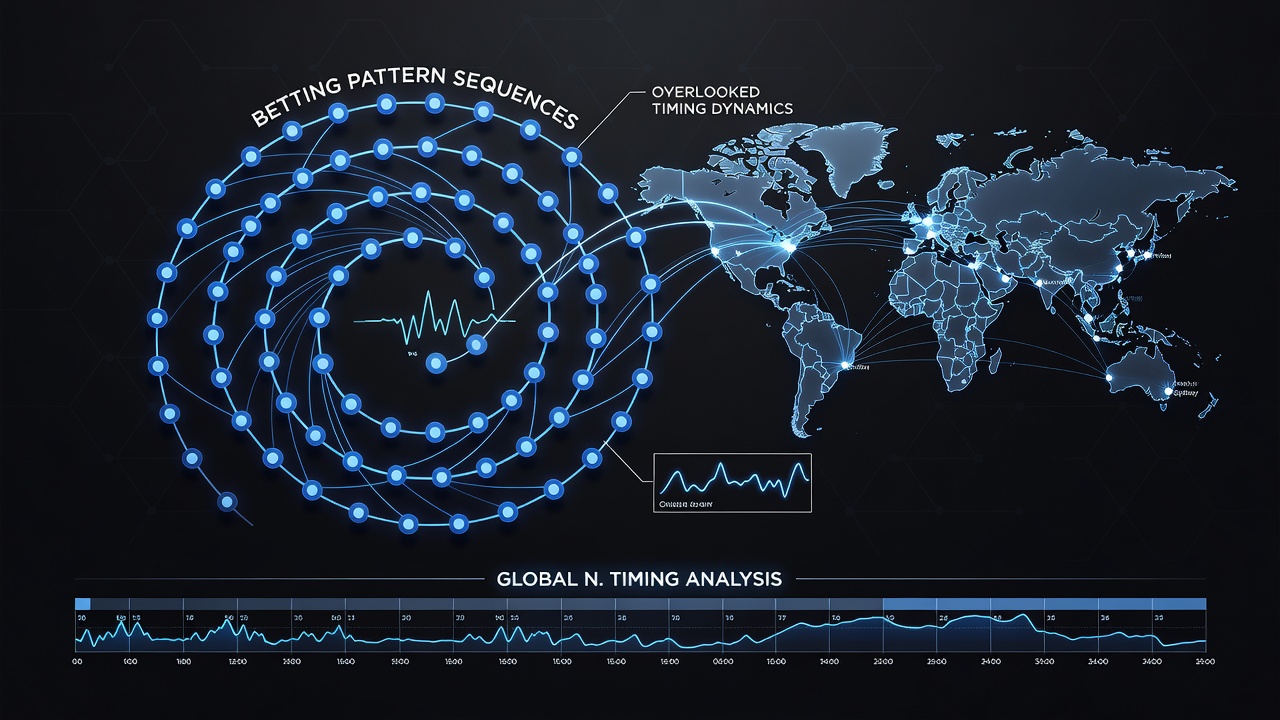
Observers tracking traffic across North American, European, and Asia-Pacific servers report that sequence lengths adjust according to local peak hours, with European sessions showing tighter clustering around 700-millisecond decision points during evening blocks. Australian regulatory filings from the past quarter document similar patterns among operators licensed in that jurisdiction, where peak activity between 19:00 and 23:00 local time produces distinct sequence signatures compared with off-peak periods.
One dataset released by a Canadian research consortium in early 2026 examined over 2.3 million Razz hands and identified twelve recurring timing motifs tied to bring-in sizing and subsequent aggression levels. Those motifs appeared across networks regardless of stake level, suggesting the dynamics stem from platform architecture rather than player demographics alone.
Network-Level Data Aggregation
Operators compile timing records into centralized repositories that feed machine-learning models designed to distinguish routine play from anomalous sequences. Figures released by the European Gaming and Betting Association indicate that sequence analysis now contributes to compliance monitoring in multiple member states, where deviations beyond two standard deviations from established baselines trigger automated reviews.
Cross-border data sharing agreements allow regulators in different regions to compare pattern distributions, revealing that certain sequence types concentrate during specific UTC windows even when local clocks differ. This synchronization effect emerges because digital platforms enforce uniform action timers irrespective of player location.
Implications for Platform Design
Engineers adjusting random number generation and action sequencing incorporate timing feedback loops that randomize decision windows within narrow bands, thereby reducing the predictability of pattern emergence. Reports from university-affiliated gaming labs note that these adjustments alter sequence frequency by measurable percentages without changing overall hand outcome distributions.
June 2026 updates to several major networks introduced variable timer lengths scaled to pot size, producing initial data sets that show reduced clustering in early streets while later-street patterns persist at similar rates. Continued monitoring through the remainder of the year will determine whether these modifications shift the global timing landscape observed so far.
Conclusion
Betting pattern sequences in digital Razz continue to map onto timing dynamics that operate consistently across worldwide networks, supported by timestamp logs, regional studies, and aggregated compliance data. As platforms refine their systems and additional datasets become available, the structural relationships between action intervals and hand progression remain central to understanding how these games function at scale.